娱乐百分百
莆田渔民高金全见义勇为 海中勇救落水男童_我的网站

A |
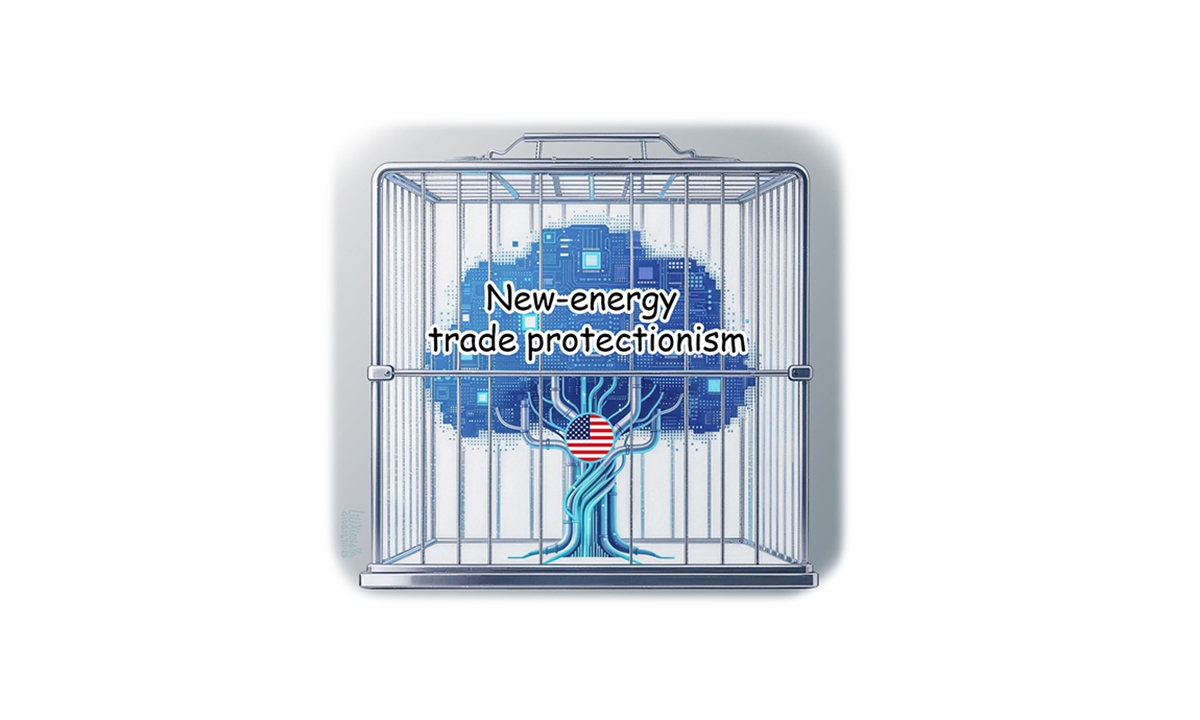
Recent media reports have questioned whether a natural gas plant built to power an Amazon data center project in Texas could become the largest climate polluter in the US. The controversy, whatever the eventual outcome, offers a reality check for America's artificial intelligence (AI) drive.
It exposes a growing contradiction: The US is racing to expand its AI capabilities, yet its protectionist trade policies are making it harder and more costly to access some of the clean-energy technologies needed to sustain that expansion. This raises a broader question: Can an energy-intensive AI race afford the costs of renewable energy protectionism?
The US is entering a new era of rising electricity demand. Data centers, the backbone of the AI economy, are emerging as one of the fastest-growing sources of power consumption. Much of that demand is still being met by fossil fuels: The International Energy Agency reports that natural gas supplies more than 40 percent of the electricity used by data centers in the US, making it their largest source of power.
So, it's not surprising that the expansion of data centers has raised concerns over their environmental impact and the pressure they could place on local power systems and electricity bills. A Gallup survey conducted in March found that seven in 10 Americans opposed the construction of AI data centers in their local area, including 48 percent who strongly opposed such projects.
The findings point to a broader challenge for the US: The race to develop AI is increasingly becoming a race to meet growing energy needs. Addressing this challenge will require more than advances in computing technology; it will also depend on an energy system capable of delivering large amounts of reliable, affordable and cleaner power. That, in turn, will require faster development and broader deployment of clean-energy technologies, from solar power to energy storage.
Yet in the clean-energy sector, the US has increasingly relied on protectionist trade measures that limit access to cost-competitive products from global markets. The country has placed greater emphasis on expanding domestic manufacturing capacity, but rebuilding entire clean-energy supply chains at home is a costly and time-consuming process. Even if expanded domestic production is achieved, it is likely to come at a higher cost, making the deployment of renewable technologies more expensive and potentially slower.
The solar industry offers a clear illustration of this policy direction. The US has continued to expand trade barriers in the sector. Reuters reported that the US government announced on Thursday a series of price floors and a 15 percent tariff on products made from polysilicon, a raw material used in solar panels.
The challenge lies in the limited scale of the US polysilicon industry. Reuters reported that the country has two polysilicon factories. Against this backdrop, relying on domestic polysilicon production while restricting access to imports runs counter to the goal of expanding solar power in the US. The country risks creating barriers that ultimately constrain its own access to the global supply chains needed for growth.
The pressing issue for the US is the speed at which new power demand is emerging. The expansion of data centers is creating electricity needs that cannot wait for domestic clean-energy capacity to develop gradually. Global supply chains can provide the scale and speed required in the near term. By narrowing access to these sources, the US risks turning clean-energy policy into a drag on the infrastructure needed for its AI race.
The US has placed AI high on its economic and technological agenda. The outcome of this race will matter greatly, as financial markets are also watching whether America can turn its AI efforts into commercial success.
This leaves the US with a difficult choice: Can it afford the cost of clean-energy protectionism while racing to build AI infrastructure? The answer may be no. Trade barriers that limit access to competitive renewable technologies could ultimately become a constraint on the AI expansion that Washington is seeking to accelerate.
The author is a reporter with the Global Times. [email protected]
。 AI摘要 莆田渔民高金全勇救落水男童被认定见义勇为,警方正寻找一同施救的无名“泳圈侠”。男童已无大碍,警方提醒海边游玩需警惕暗流等风险,注意安全。 东南网8月23日讯(福建日报报业集团记者 陈盛钟 通讯员 朱中威)19日,在莆田湄洲岛海域勇救落水男童的当地渔民高金全,被莆田市公安局湄洲湾北岸经济开发区分局认定为见义勇为。

B | “当时根本没想那么多,只有救人一个念头,生命是最重要的!”回想起跳海救人瞬间,高金全感慨地说。 8月7日傍晚,一名9岁小男孩在湄洲岛莲池沙滩玩耍时,因所穿拖鞋不慎被海浪冲走,他情急之下便一路向前追赶,不料被一阵突如其来的大浪卷入海中。此时,海边风浪汹涌,男童在海中无力挣扎,越漂越远。

C | 岸上的妈妈亲眼看着孩子被海水卷走,急得跳脚大哭、焦急呼救,情况万分危急。 恰在此时,58岁的湄洲岛高朱村渔民高金全骑车途经此地,目睹了这惊险的一幕。他没有丝毫犹豫,纵身跳入波涛汹涌的海中施救。凭着过硬的水性,他全力向溺水男童游去,最终牢牢护住孩子,艰难地往岸边奋力回撤。 然而,汹涌的海浪不断袭来,阻力极大,长时间搏浪救人的高金全越来越吃力。

D | 千钧一发之际,一名热心群众带着游泳圈跳入海中驰援。二人默契配合,并肩作战,最终成功把小男孩安全救回岸边。其后,这位不留姓名的“泳圈侠”悄然离开现场,身份至今未确认。

E | 看到男童化险为夷,大家都松了一口气。随后赶到的湄洲派出所民警将男童送至医院进行全面检查,确认其身体并无大碍。 为不让每一份善意被埋没,目前,莆田警方正面向全社会征集线索,全力寻找当天一起参与救援的无名英雄,延续温暖。 莆田海岸线绵长,海边亲水游玩、赶海踏浪成为游客日常休闲首选。不过,近海存在浪涌、离岸流、礁石、滩涂淤泥等诸多风险,有时看似平静的海面却暗藏极大安全隐患。

F | 对此,警方提醒,到海边游玩务必提高警惕,应留意观察海滩和海浪状况,注意相关警示标识,不要盲目下水嬉戏,以免发生意外。
Current article:http://o452.cengzaodengchawonin.cyou/haiow/20260826/436637.html
Published on:16:54:46